Understanding Chimney Removal Services
Chimney removal services have become increasingly sought after by UK homeowners looking to modernise their properties, reduce maintenance burdens, and reclaim valuable space. At M24 Maintenance, we’ve witnessed a growing trend of Manchester residents opting to remove unused chimneys that serve no practical purpose in contemporary homes. Whether you have a period property with multiple redundant flues or a more modern home with a non-functional chimney stack, our professional chimney removal services offer a comprehensive solution.
The process involves carefully dismantling the chimney structure, from the pot and stack on the roof down through the breast within the property. It’s a significant structural alteration that requires expert knowledge, proper planning, and meticulous execution. Craig Adams and our experienced team at M24 Maintenance understand the intricacies involved in safely removing chimneys whilst maintaining the structural integrity of your property.
Many homeowners are surprised to learn that chimney removal can be partial or complete. Partial removal might involve taking down the stack above the roofline whilst leaving the breast intact, whilst complete removal involves removing the entire chimney structure from roof to ground floor. Each approach has its own considerations, and our team can advise on the most suitable option for your specific circumstances.
Reasons to Consider Chimney Removal Services
There are numerous compelling reasons why property owners across Manchester and the wider UK choose to invest in chimney removal services. One of the primary motivations is the elimination of ongoing maintenance costs. Chimneys are notoriously high-maintenance features—they require regular repointing, pot replacement, flashing repairs, and damp proofing. For a chimney that’s no longer in use, these costs represent an unnecessary financial burden.
Another significant advantage is the creation of additional space. In many UK homes, particularly terraced properties common throughout Manchester, chimney breasts protrude significantly into rooms, reducing usable floor space. Removing a chimney breast can free up several square feet in each room it passes through, which can be transformative in smaller properties. This reclaimed space can be utilised for built-in storage, larger furniture placement, or simply to create a more open, spacious feel.
Energy efficiency is also a crucial consideration. Unused chimneys act as thermal bridges, allowing precious heat to escape from your home whilst drawing in cold air. Many of our customers at M24 Maintenance report noticeable improvements in warmth and reduced energy bills following chimney removal. Additionally, removing a chimney eliminates the risk of water ingress through deteriorating flashing or damaged pots—a common cause of internal damp problems.
The Chimney Removal Process Explained
Professional chimney removal services follow a carefully structured process to ensure safety and compliance with building regulations. At M24 Maintenance, we begin every project with a thorough site assessment. Craig Adams personally oversees this initial evaluation, examining the chimney’s construction, its relationship to load-bearing walls, and any potential complications such as shared flues in terraced properties.
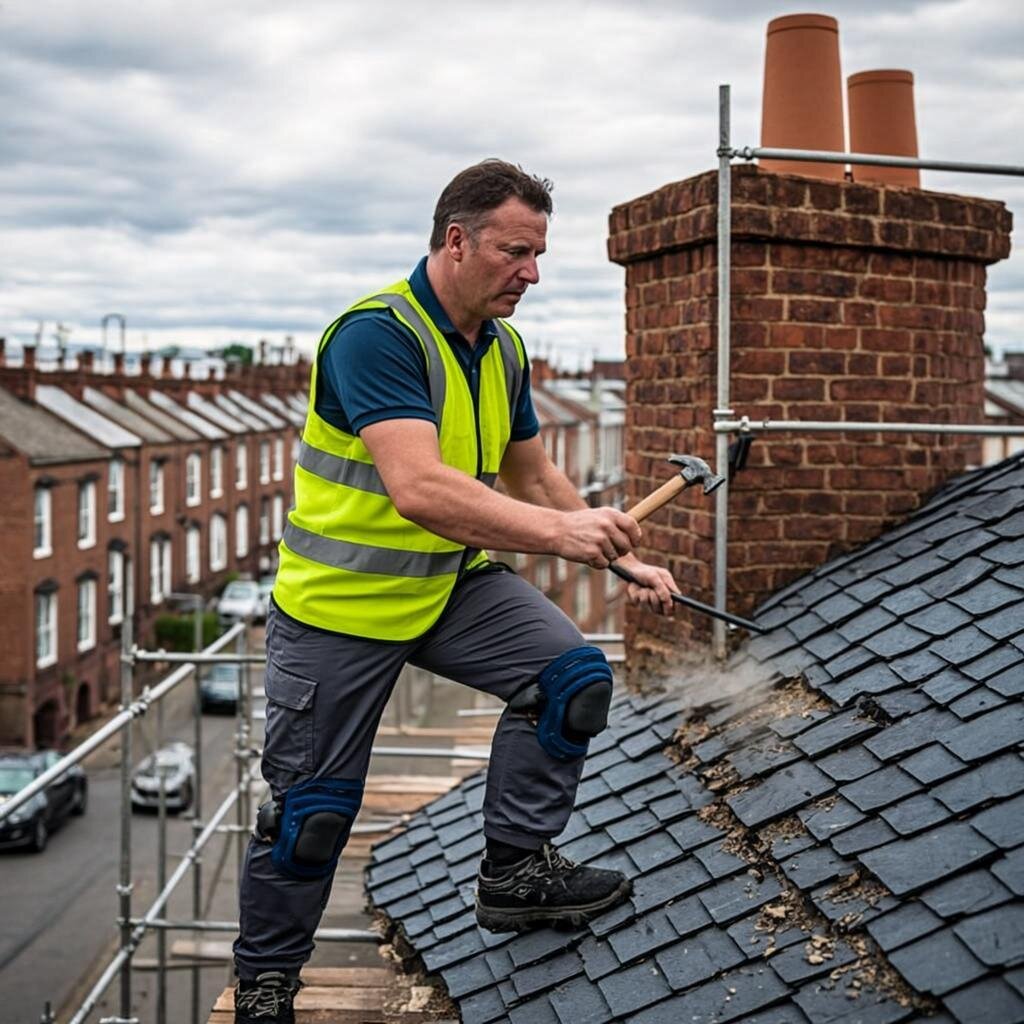
The removal typically begins at the top, with the chimney pots and stack being carefully dismantled. This phase requires particular attention to weather conditions and safety protocols, especially when working at height. Our team uses appropriate scaffolding and fall protection equipment to ensure safe working conditions. As we remove each course of bricks, we carefully assess the structural implications and make any necessary temporary supports.
Once the external stack is removed and the roof is properly sealed and weatherproofed, attention turns to the internal chimney breast. This involves carefully removing brickwork floor by floor, starting from the uppermost level. Crucially, at each floor level, we install structural support—typically steel gallows brackets or RSJs (Rolled Steel Joists)—to support the remaining masonry above. The void left by the chimney breast is then made good, with flooring extended, walls plastered, and ceilings patched as required. Throughout the process, we maintain strict dust control measures and protect your property with appropriate sheeting.
Building Regulations and Structural Considerations
Chimney removal is classified as a structural alteration, which means it falls under Building Regulations approval in the UK. This is not a project that should be undertaken without proper notification to your local authority’s Building Control department. At M24 Maintenance, we handle this administrative process for our clients, ensuring all necessary applications are submitted and approvals obtained before work commences.
The structural implications of chimney removal cannot be overstated. Chimneys often form integral parts of a building’s structural framework, particularly in older properties. Removing a chimney breast without proper structural support can lead to catastrophic failure, including partial collapse of walls or upper floors. Our team at M24 Maintenance works to detailed structural calculations, often prepared in conjunction with qualified structural engineers, to ensure that all necessary support mechanisms are correctly specified and installed.
Party Wall considerations are also crucial, particularly in semi-detached or terraced properties common throughout Manchester. If the chimney you wish to remove is on a shared wall, you must comply with the Party Wall etc. Act 1996. This involves serving formal notice on your neighbours and obtaining their agreement before proceeding. Craig Adams and our team are experienced in navigating these requirements and can guide you through the process, ensuring all legal obligations are met.
Cost Factors in Chimney Removal Services
The cost of chimney removal services varies considerably depending on several factors. A partial removal—taking down just the stack above roof level—typically costs between £1,500 and £2,500, whilst complete chimney removal involving the breast in multiple rooms can range from £3,500 to £6,000 or more. At M24 Maintenance, we provide detailed, transparent quotations that clearly itemise all aspects of the work.
Several elements influence the final cost. The number of floors affected is a primary factor—removing a chimney breast that passes through three storeys requires significantly more work than one spanning just two floors. The type of property also matters; working in a terraced house with limited access presents different challenges compared to a detached property. Additional costs may arise from the need for structural engineer’s calculations, Building Control fees, and party wall surveyor fees if neighbours are affected.
It’s also important to budget for making good after the removal. This includes plastering, skirting board replacement, flooring repairs, and decorating. Some homeowners choose to have these elements included in the main contract, whilst others prefer to handle decoration themselves. We’re happy to discuss your preferences and provide flexible options. For a free, no-obligation quote tailored to your specific chimney removal requirements, call Craig Adams on +447735097167.
Why Choose M24 Maintenance for Your Chimney Removal
Selecting the right contractor for chimney removal services is perhaps the most critical decision you’ll make in this process. M24 Maintenance brings years of experience in structural alterations and building maintenance to every project. Based in Manchester, we understand the particular challenges presented by local housing stock—from Victorian terraces in areas like Moss Side and Rusholme to Edwardian semis in the suburbs. This local knowledge is invaluable when planning and executing chimney removals.
Craig Adams leads our small, dedicated team with a hands-on approach that ensures quality control at every stage. Unlike larger companies where you might never meet the site manager, Craig is personally involved in each project, from initial assessment through to final sign-off. This personal investment in our work has earned us a reputation for reliability and craftsmanship throughout Greater Manchester.
We’re fully insured for all structural works, including chimney removal, and our public liability coverage provides peace of mind for our clients. We also guarantee our workmanship—because we believe in doing the job right the first time. Our commitment to customer satisfaction means we maintain clean, safe worksites, communicate proactively throughout the project, and never consider the job complete until you’re entirely satisfied. Visit m24maintenance.co.uk to see examples of our previous chimney removal projects and read testimonials from satisfied customers.
Preparing Your Home for Chimney Removal
Proper preparation is essential for a smooth chimney removal project. Once you’ve engaged our services at M24 Maintenance, we’ll provide detailed guidance on preparing your property. Generally, we recommend removing all furniture, pictures, and valuable items from rooms where the chimney breast is located. Dust is inevitable during any structural work, despite our best containment efforts, so protecting or removing soft furnishings is advisable.
If the chimney is currently in use—perhaps housing a gas fire or solid fuel burner—this will need to be safely disconnected and removed before we commence structural work. Gas appliances must be disconnected by a Gas Safe registered engineer, and we can coordinate this with our trusted network of subcontractors if required. Similarly, any electrical sockets or wiring in the chimney breast will need to be rerouted by a qualified electrician.
Access is another important consideration. We need clear access to all rooms where the chimney breast is present, as well as external access for scaffolding erection. In terraced properties, we’ll discuss options for getting materials in and waste out—sometimes this requires cooperation with neighbours. We also recommend informing your neighbours about the upcoming work, particularly in attached properties, as some noise and vibration is unavoidable. Our team at M24 Maintenance is always happy to discuss access requirements during our initial site visit.
Aftercare and Making Good Following Chimney Removal
Once the structural elements of chimney removal are complete, attention turns to making good the affected areas. This phase transforms the construction site back into a home and is where the quality of our craftsmanship at M24 Maintenance truly shows. We take pride in ensuring that, once our work is complete, there’s no visible evidence that a chimney ever existed—just seamless walls and floors that look as though they were always that way.
Internally, this involves plastering the wall where the chimney breast was removed, ensuring a perfect match with existing plasterwork. We’ll also repair or replace skirting boards, architraves, and any other architectural details to maintain your home’s character. Flooring gaps left by the chimney breast are addressed—whether that involves extending existing floorboards, installing matching replacement boards, or laying new flooring. Ceilings are patched and made good, with any necessary redecoration completed to your specification.
Externally, the roof is fully restored where the chimney stack was removed. This includes replacing tiles or slates, ensuring proper underlay, and making watertight all junctions. If your property is rendered or pebbledashed, we’ll match the existing finish seamlessly. Leadwork is installed as necessary to ensure complete weatherproofing. All our making good work is covered by our workmanship guarantee, giving you confidence in the longevity of the results. For ongoing maintenance support after your chimney removal, M24 Maintenance remains just a phone call away on +447735097167.
continue reading
Related Posts

Why Manchester Based Rubbish Removal Services Are in Such Demand […]
-
Why Manchester Properties Need Professional Jet Washing Anyone who has […]
-
Why Choose a Local Gardening Company In Manchester? Manchester’s climate […]